
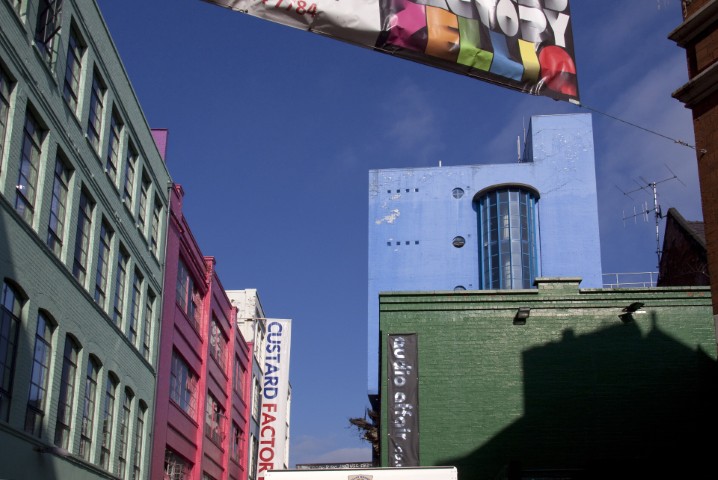
image for illustration: Custard Factory, by Tony Hisgett from Birmingham, UK, CC BY 2.0, via Wikimedia Commons
Historic England has launched ‘Heritage Works for Creative Businesses’, a new publication which will help developers to transform empty and underused historic buildings into thriving creative industry hubs.
Historic England writes:
Around a quarter of all UK creative businesses already operate from heritage conservation areas, with listed buildings attracting significantly more creative firms than modern alternatives. Creative industries contribute over £125 billion to the UK economy each year – more than 5% of GDP – and employ approximately 2.4 million people. These sectors, which include design, technology, media and advertising are a cornerstone of Britain’s soft power, influencing international trade, tourism investment and cultural diplomacy.
Historic buildings offer creative businesses character, flexible spaces and distinctive environments. Former industrial sites like Birmingham’s Custard Factory and Halifax’s Dean Clough have been successfully transformed into vibrant creative ecosystems where artists, designers and engineers collaborate and innovate.
Heritage Works for Creative Businesses addresses common challenges developers face when converting heritage buildings, including planning requirements, repair costs and financing difficulties. Historic England’s expertise helps de-risk projects by providing certainty around budgets and timeframes whilst preserving the buildings’ historic character. Examples of successful conversions include Rutland Mills in Wakefield (now Tileyard North), a creative hub with state-of-the-art recording studios, and Hastings’ Observer Building, which reopened as modern office space for creative professionals. These projects demonstrate how heritage regeneration creates local employment opportunities whilst instilling community pride.
Historic England’s step-by-step guidance covers everything from initial feasibility studies through to securing funding and managing construction. The organisation provides ongoing support to help developers navigate the entire conversion process successfully. Heritage Works for Creative Businesses is aimed at many types of developers, including commercial property companies, charitable trusts, individual entrepreneurs, and local authorities seeking to revitalise their historic building stock.
Claudia Kenyatta CBE and Emma Squire CBE, Co-CEOs Historic England
[said] ‘Creative businesses love to work in historic buildings. These spaces are full of stories and character and are a source of inspiration, helping to spark new ideas. With the Government’s commitment to supporting our creative industries, we can be confident that there will be a continuing strong demand for quality workspaces converted from former mills, factories and other historic buildings.’
Heritage Minister Baroness Twycross [said] ‘Heritage has a vital role to play in our economic growth. This programme shows what an opportunity our empty or underused heritage buildings present and helps businesses get certainty on planning requirements and cost planning to help transform them. Our historic buildings, up and down the country, are filled with character and are the perfect places to spark creative inspiration. I’m pleased to see this link between heritage and the creative industries growing ever stronger.’


.jpg)