
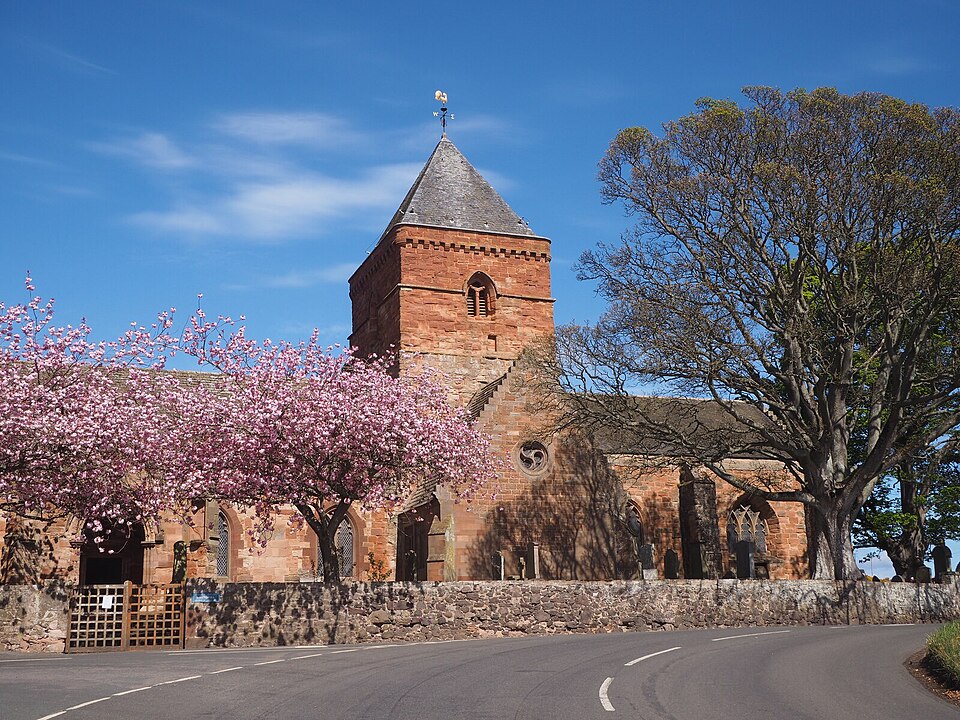
image for illustration: St Mary’s Church at Whitekirk by Jennifer Petrie, CC BY-SA 2.0 via Wikimedia Commons
Built Environment Forum Scotland (BEFS) has published the latest edition of the Places of Worship (POWF) Newsletter.
BEFS writes:
In this edition of the POWF Newsletter, Dr. Emily Johnston and Dr. Lizzie Swarbrick share an update on Research in Action on Church Heritage (ReACH), a project addressing the urgent challenge of church closures across Scotland. The initiative has launched a symposium, established a Heritage Action Group, and is building a comprehensive database of Scotland’s 860+ churches at risk. Dr Emily Johnston FSAScot is ReACH’s Communities Officer. She joined the team in August 2025 after her PhD at the University of Edinburgh, specialising in community engagement in archaeology. Dr Lizzie Swarbrick is the Research Manager for ReACH and is an art and architectural historian, specialising in Scottish medieval churches.
Church closures are continuing apace in Scotland, potentially leading to losses of heritage and community spaces. One third of Scotland’s churches are due to close by 2030, with some holding their last services this past Christmas. To tackle this issue, Research in Action on Church Heritage (ReACH) (the new name for Finding Futures for Scotland’s Churches) launched last year. Since the project’s inception, the team has grown and we’ve been hard at work on the data, conducting site visits, and fostering sector-wide collaboration to deal with the urgent challenge to Scotland’s ecclesiastical heritage.
In September, we publicly launched ReACH with a symposium in Edinburgh and online. The event featured 20 lightning talks from people with a wide range of expertise across the sector, including speakers from heritage bodies, museums, and academia. Together, we got a kaleidoscopic impression of the treasures encompassed by Scottish churches, from medieval tombs to Gaelic psalm singing, modernist architecture to early modern Covenanting banners. A roundtable discussion with speakers from Historic Environment Scotland, Historic Churches Scotland, and the University of Stirling rounded off a day full of conversations which highlighted shared challenges and opportunities for the future of church buildings, as well as the importance of working together to preserve their material and social heritage.
The collective will to meet the current challenges head on is truly heartening, and we’re actively working with other groups to make sure efforts aren’t duplicated and that we’re all sharing our information and expertise. As part of this, we’ve set up a Heritage Action Group. This group will shape the ReACH project’s work, contribute to our data collection, and assist in us providing support to churches who would like help in celebrating their heritage. The membership of the group is open to anyone who feels they have something to contribute. To request an invitation to our next meeting, email churches@socantscot.org.
To get a better sense of the issues facing communities dealing with the closure of their churches, the team have been on visits to churches in Burntisland, Crail, St Monan’s, Inverness, Kirkmichael, and Cromarty. All of these communities are at different stages of their journey, and we were pleased to hear that St Monan’s has since successfully received funding from The National Lottery Heritage Fund to ensure its sustainable future. We also undertook our first pilot studies at Inverness Old High Kirk and Whitekirk, East Lothian, trialling our methods for recording both the tangible heritage and the intangible social value of churches.
Perhaps the biggest task for the team is creating a database which records the heritage of Scotland’s 860+ churches at risk of closure. This will allow us to get a bird’s-eye view of the situation, so that we can prioritise particular churches for further research and support. We’re beginning the process of data collection to record and build a clearer picture of the heritage which exists in Scotland’s church buildings, starting with pulling existing data about these at-risk churches together into one place. We’re really grateful to groups such as Scottish Church Heritage Research (who manage the PoWiS database) Scottish Stained Glass Trust, the Pictish Arts Society, and Sowne of Organe for already offering to share their resources with the project. Creating a public record of what we may be losing is an important, but sometimes sobering, task— especially when almost every week we hear of another church closing its doors to the public, or put up for sale. All of the information we collect will be made publicly accessible on our website. Everyone – heritage bodies, church communities, academics, enthusiasts – will be able to use the information and images to better understand, plan and prioritise the protection of heritage at risk. It will also showcase the brilliance of Scotland’s church heritage.
As ReACH progresses, we aim to continue building connections between research and practice, supporting the people and places that make up Scotland’s rich ecclesiastical heritage. To keep up with everything happening as part of the project, please visit our new website (https://churchheritage.scot), which will act as a home for our church heritage database, resources and blog posts. You can also follow the project on LinkedIn, Bluesky, Instagram, and Facebook (@churchheritage) or sign up to our e-newsletter here.


