
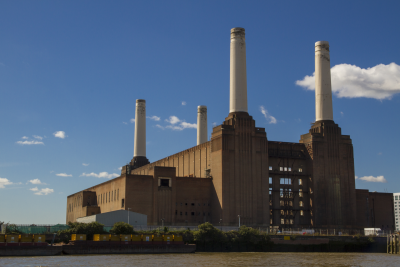
image for illustration: Battersea Power Station, Alberto Pascual, CC BY-SA 3.0, via Wikimedia Commons
Historic England has focussed on the Gothic revivalist architect whose 20th century works include Battersea Power Station, Liverpool Cathedral, Waterloo Bridge and the red telephone box.
Nicky Hughes writes for Historic England:
Giles Gilbert Scott (1880-1960) was a scion of an eminent Victorian architectural dynasty. His grandfather was George Gilbert Scott (1811-1878), who built masterpieces such as London’s Foreign and Commonwealth Office in Whitehall, the Albert Memorial, and the Midland Grand Hotel at St Pancras Station. His father, also George Gilbert Scott (1839-1897), leading designer of workhouses, created significant buildings that included the London churches of All Hallows, Southwark and St Agnes, Kennington.
Following family tradition, Giles Gilbert Scott himself designed many Anglican and Catholic religious buildings nationwide, as well as a number of war memorials. He also created some of the country’s most important and, revered secular buildings and structures.
5 of his key works…
- Anglican Cathedral Church of Christ, Liverpool, foundation stone laid 1904, completed 1978
- Red telephone box
- Battersea Power Station, London, construction began 1929, completed 1955
- Waterloo Bridge, London constructed between 1937 and 1945
- Bankside Power Station, now Tate Modern constructed between 1947 and 1963


